Most hunters who track Cape buffalo think they know what they are doing — until the bush corrects them, permanently. Reading fresh tracks, positioning stands downwind, and moving with near-silent fox-walk steps are only the beginning. One wrong move with a wounded buffalo changes everything. The skills separating a successful hunt from a fatal one come down to specific techniques most guides will not spell out plainly. The details ahead on scent control, proper stance, and emergency protocol might be the most important thing you read before stepping into the field.
How to Quickly Tell Fresh Buffalo Tracks and Droppings
Read tracks and dung the moment you find them; fresh sign tells you where buffalo were recently and how they moved.
Read tracks and dung at once; fresh sign shows where buffalo were and how they moved.
You check edge sharpness and surface condition. Sharp, clean edges and minimal debris mean fresh. Cracked or crumbly edges mean older. You note wet or pliable dung versus hard, dry patties.
“Buffalo spoor identification relies on size and shape.” Front-foot length is about 13–14 cm, two large toes, possible dew claws in soft ground. Compare spacing and substrate. Multiple similar prints plus many droppings indicate herd travel. Partnering with professional wildlife guides can sharpen your ability to read these signs accurately in the field.
You use these cues when tracking wounded buffalo. Track sequence, registration, and fresh dung guide direction. This method gives clear, reliable field decisions. Fresh prints are easiest to spot in soft trailside soil.
Read Wind and Scent: Staying Upwind and Using Smell Cues
When you track buffalo, wind direction is the single most important variable for scent control. You’ll place yourself downwind when possible, so breeze moves from animal towards you. For cape buffalo hunting, prevailing wind direction at property scale guides stand placement. Use forecasts as a start, then verify on-site. “Measure local flow with puffer bottles, milkweed floss, or smoke.” – Visual markers: 5–20 m traces for powder, 50–200 m for milkweed. – Thermals: expect lift at +5°C daytime heating, downslope flow after sunset. Map airflow from multiple start points. Repeat tests until patterns match. Choose stands where terrain (ridges, draws, ponds) funnels scent away from travel routes. This yields safer approaches and higher success rates. Experienced South African hunting outfitters apply this wind knowledge across diverse Limpopo concessions to maximise client success on Big Five pursuits. Wind study is crucial because ungulates often have far greater scent sensitivity than hunters, so always account for the Whitetail nose.
Silent Movement Techniques for Thick Bush and Long Stalks
Silent movement in thick bush depends on deliberate foot placement and strict tempo control.
Silent movement in thick bush hinges on deliberate foot placement and disciplined tempo for unnoticed passage.
You scan 2–3 steps ahead, choose moss or damp ground, and avoid dry leaves and twigs.
Use existing game paths when possible.
Move along edges and shadows, not through open gaps.
You use a fox-walk heel-to-toe roll, knees slightly bent, and test the surface before full weight.
Take short bursts, then complete stillness.
Time steps with gusts of wind to mask sound.
Keep arms and gear tight, lower your centre of gravity, and contort around obstacles instead of pushing them.
Data:
- Step spacing: 30–60 cm.
- Speed: 0.2–0.5 m/s.
This aids African bush tracking and dangerous game tracking success.
Arriving well-prepared with properly documented firearms allows you to focus entirely on the hunt, and working with specialists who manage South Africa hunting permits ensures your rifle is cleared and ready before you ever set foot in the bush.
Additionally, before moving through unfamiliar ground, pause to read the terrain and identify noisy surfaces like dry leaves or twigs, a basic terrain awareness practice.
Why Wounded Buffalo Are Extremely Dangerous : Trust the PH
Because a wounded Cape buffalo often becomes more dangerous than before, you must treat the track as an acute threat from the first sign of blood or a missed shot. You will follow professional hunter guidance, not impulse.
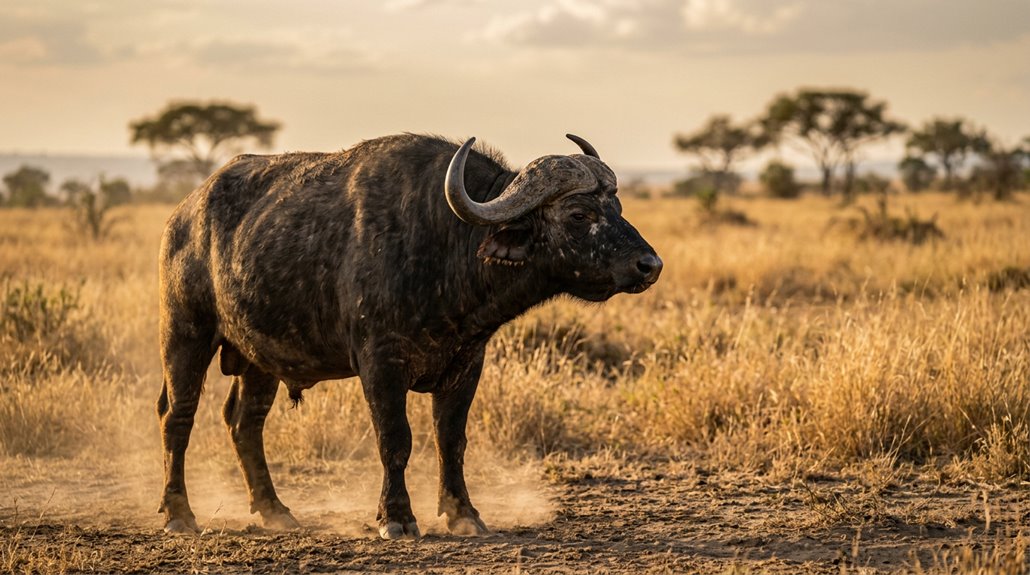
A wounded buffalo can circle back, lie in wait, or charge at up to 50 km/h. Expect 900 kg mass, 1.7 m shoulder height, and 3.4 m length to make close encounters lethal. Historically responsible for more hunter deaths in Africa than any other animal.
“Wait at least 30 minutes if the animal doesn’t go down,” your PH will say.
Bulleted data:
- Risk: close-range charge, trampling, impact.
- Error: rushing the track, noisy movement in cover.
- Practice: never track alone, have backup ready.
For big five safaris, trust measured PH decisions for safety. Experienced professional South African hunting outfitters understand the precise protocols required when tracking dangerous wounded game across dense bushveld terrain.
Fitness, Footwear, and Stamina Tips for Long Hot Walks
A wounded buffalo track teaches you to respect the environment and your limits; long hot walks demand the same discipline. Start heat acclimatisation with short walks, increase duration over 4–14 days, and expect reduced performance in high heat. Monitor forecasts and avoid midday.
A wounded buffalo track teaches respect for the land and limits; begin heat acclimatisation gradually over 4–14 days.
Choose lightweight, ventilated walking shoes and moisture-wicking socks. Consider African hunting footwear rated for breathability and support. South African hunting outfitters recommend light-coloured, loose-fitting fabrics and a hat for sun protection. For longer outings, include some strength training beforehand to help maintain muscle endurance.
Hydration plan: 16–20 oz 1–2 hours before, then 6–12 oz every 10–15 minutes; replace 16–24 oz after exercise. Use electrolyte drinks for heavy sweating.
Pacing: start and finish slowly, use shade, take frequent breaks. Stop immediately for headache, dizziness, or faintness and seek medical care if symptoms persist. Once your hunt concludes successfully, a dedicated trophy handling team can manage all field preparation, taxidermy, and shipping logistics so you can focus entirely on recovery and celebration.