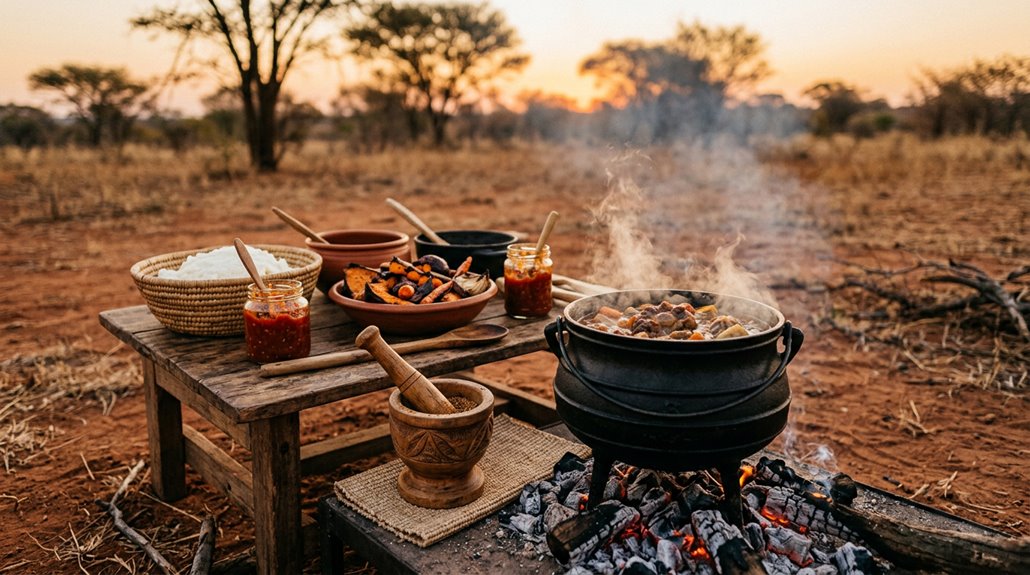
Most safari-goers pack up at dusk and miss everything. What they don’t realise is that roughly 70% of big-cat sightings happen within two hours after sunset—long after the day crowds have retreated. Evening drives operate on an entirely different rhythm, one shaped by golden-hour light, red-filtered spotlights, and guides who read darkness like a second language. The science, the strategy, and the sensory experience are nothing like what happens at sunrise.
Evening Safaris Explained: Why Sunset Changes Everything
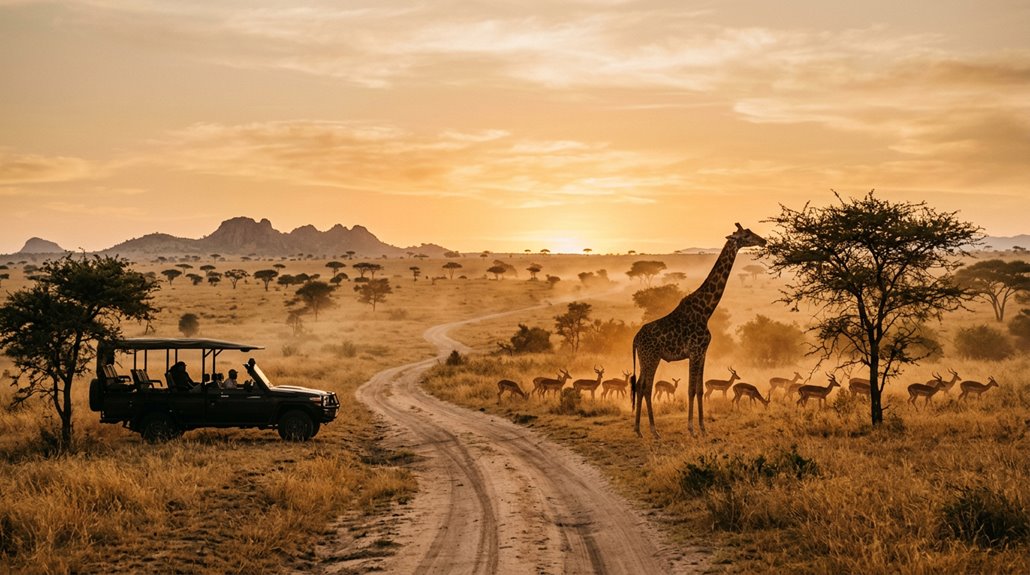
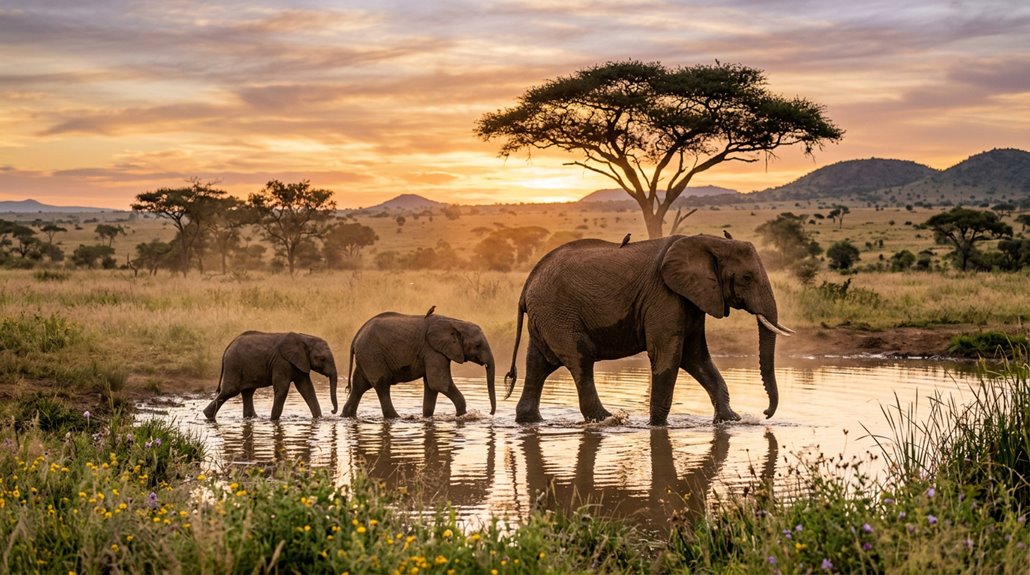
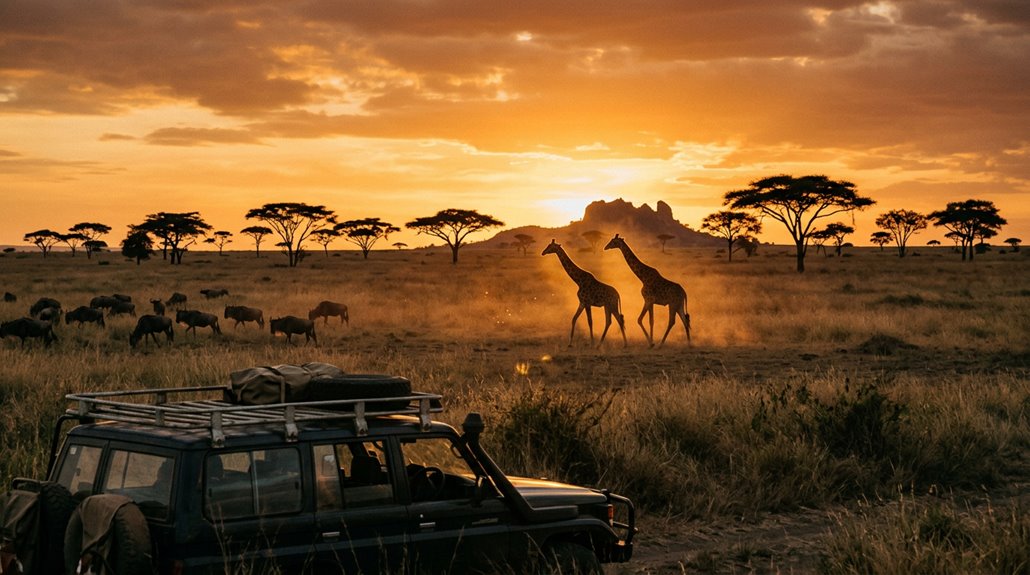
Capturing the hour before sunset reveals dramatic changes you won’t see at midday. You’ll notice golden hour light, warmer and softer than noon, with colour saturation increasing by roughly 20–40% depending on dust and humidity. Lower sun angle creates diffuse illumination, reducing harsh contrast and improving detail visibility for photography. Evening safaris South Africa often show stronger visual separation between animals and background, aiding composition. Wildlife activity rises as temperatures fall; many species shift from rest to movement within 30–90 minutes of sunset. Silhouettes form against red, orange, and indigo skies, with acacia trees and elephant herds providing clear horizon shapes. After sunset, guides use alarm calls, tracks, and night vision tools to read the environment, supplying a measured, professional experience. Ranger-led open vehicle drives allow guests to position themselves optimally for capturing Big Five photography during these low-light conditions. Many multi-park itineraries also pair evening game drives with nearby destinations like Masai Mara for extended wildlife viewing.
Timing Your Drive: From Late-Afternoon Departures to Full Night Runs
You’ll time departures to match animal activity, with late-afternoon drives typically leaving 60–90 minutes before sunset to catch the shift from resting to feeding.
Full night runs start just after dark, often using a spotlight and lasting 3–4 hours to target nocturnal species and predator behaviour. Experienced operators can also craft custom adventure packages that combine night drives with deep-sea fishing or plains game hunting for a complete African experience.
Operators adjust start times to local sunset, season, and reserve rules, and you’ll find July–September often yields the highest sighting rates in South Africa.
Night safaris are guided wildlife tours conducted after sunset to observe nocturnal animals in their natural habitats guided wildlife tours.
Late-Afternoon Departures
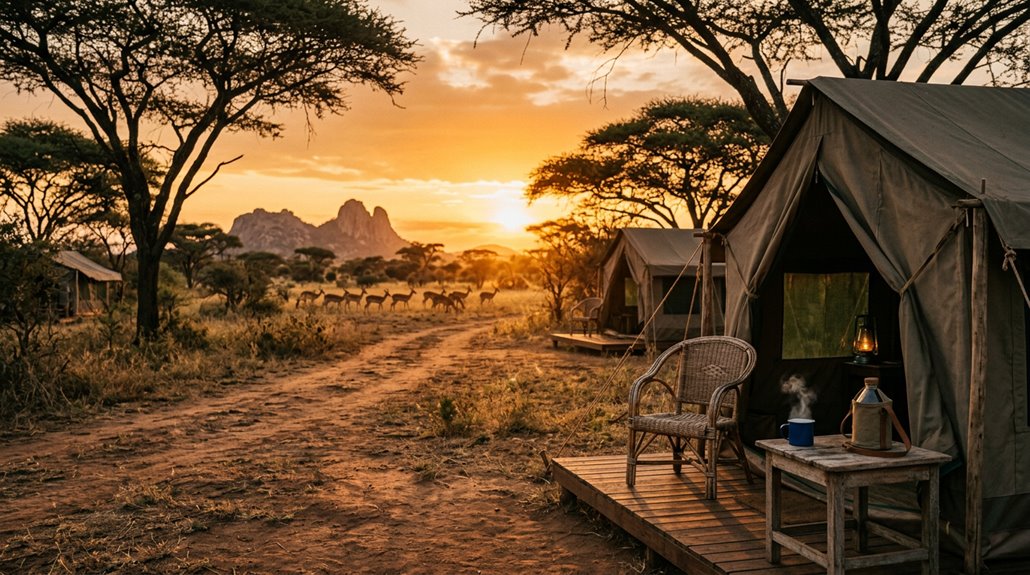
Late-afternoon departures bridge the cool morning activity and the dramatic evening hours, and they’re timed to get you into position as animals become active again. You’ll join African dusk game drives that often start around 16:00–16:30 in summer and 15:00–15:30 in winter. Timing varies by park, concession, and season. You’ll note park rules may require return by dark or allow two hours post-sunset in private concessions. Check sunset times; seasonal shifts are about one hour. Animal behaviour and guest experience can also be influenced by crowd patterns and park operations, so consider arrival timing when planning. For those seeking a more structured pursuit, plains game hunting South Africa concessions across prime terrain offer an entirely different kind of late-afternoon engagement with the bush.
| Season | Typical Start | Park Rule Impact |
|---|---|---|
| Summer | 16:00–17:00 | Later departures possible |
| Winter | 15:00–16:00 | Earlier return often required |
| Concessions | Up to 2 hrs after sunset | Extended viewing allowed |
After-Dark Night Runs
After sunset, night drives shift the focus from daylight sightings to true nocturnal ecology. You’ll join guided drives that commence just after sunset, with a safety briefing and collection. Typical drives last about 3 hours. Guides use spotlights and vehicle positioning to aid nocturnal wildlife spotting, targeting leopards, lions, hyenas, aardvarks, and porcupines.
- Schedule: depart just after sunset; duration ~3 hours.
- Season: dry season (May–October) improves visibility; July–September is peak. Visitors should also consider that the dry season often concentrates wildlife around waterholes, enhancing viewing opportunities.
- Gear: warm layers, closed-toe shoes; follow guide instructions.
- Safety: operated in designated reserves; briefing required.
“You’ll rely on guide skill, silence, and low-light technique.”
Full night drives reveal hunting and movement patterns, a measurable, focused wildlife experience.
Golden-Hour Moments: Sundowners, Silhouettes, and Photography Tips
When the sun sinks low and the light narrows to a 20–40 minute window, golden-hour photography delivers warm tones, softer contrast, and longer shadows that sharpen texture in fur, dust, and grass.
As the sun sets, a brief 20–40 minute glow sculpts warm tones, softened contrast, and textured shadows.
You’ll time drives to catch that light. You’ll enjoy safari sundowner drinks while scouting compositions. Guides position vehicles for side or back light to create depth and rim light.
“Underexpose by 1–2 stops for clear silhouettes,” your guide will say. Use manual or Aperture Priority mode. Recommended apertures: f/2.8–f/5.6 for portraits. ISO range: 400–1600, raise to 3200 as light fades. Shutter speeds must stay fast for motion, 1/500s or quicker from a moving vehicle.
Scout horizons, choose simple backgrounds, and prioritise distinct outlines for great results. Planning your trip well in advance ensures that airport transfers South Africa are secured so you arrive at the hunting camp relaxed and ready to focus on photography from the first evening drive. Golden hour also increases animal activity at dawn and dusk, boosting chances of exciting sightings.
Sensory Shift After Dark: Cooler Air, Soundscapes, and Nocturnal Behaviour
As sunlight fades, air temperature can drop sharply, and you’ll notice the change within 10–30 minutes after sunset. The savanna cools 5–10°C (9–18°F) on many dry-season evenings, so bring a light jacket. You join a small group and feel a sense of belonging in these magical bush evenings.
“Sound becomes primary.” Hearing picks up insect choruses, frog calls, and distant alarm calls. Quiet makes soft footfalls audible. Predators and prey use sound more at night.
“Nocturnal shifts are measurable.” Many mammals switch activity to night to reduce heat stress and water loss. Grazing often moves to dusk and night, increasing sightings after 18:00–22:00.
- Cooler air lowers evaporative stress.
- Soundscapes reveal movement.
- Nocturnal activity rises.
- Night timing varies by species.
Night Viewing Techniques: Spotlights, Red-Filtered Lights, and Safe Stalking of Owls, Genets, and Bushbabies
Night viewing relies on controlled light, careful movement, and focused listening. You join spotlight game drives led by an expert guide, who uses a 12V, 100W spotlight to scan verges, trees, and low branches. You’ll hear calls, watch eye-shine, and follow calm instructions. Red-filtered lights (620–700 nm) reduce disturbance, preserving natural behaviour. You move slowly, stop briefly, and keep 10–20 m distance for small mammals. Once your safari concludes, a dedicated team handles African hunting trophy shipping logistics, managing all paperwork and co-ordination from field preparation through to final delivery at your door.
| Technique | Purpose | Tip |
|---|---|---|
| Spotlights | Detect eye-shine | Sweep slowly |
| Red light | Low disturbance | Use 620–700 nm |
| Slow stalk | Minimise stress | Stop on cue |
| Listening | Locate owls | Binoculars help |
You’ll feel included in a small group, and the guide will guarantee a safe, respectful viewing experience.
What to Pack and Expect: Clothing, Camera Gear, Safety, and How Predator Activity Shapes the Route
Pack neutral, layered clothing such as long trousers and a lightweight fleece because temperatures can drop 5–10°C after sunset.
Bring a camera with a 70–200mm or 100–400mm zoom, three spare batteries, chargers, and a 10,000 mAh power bank to guarantee at least one full evening of shooting.
Carry insect repellent, closed-toe shoes, and follow your guide’s route choices, which often prioritise open habitats and water points where predators are most active at dusk.
Essential Clothing Choices
When you prepare for an evening safari, plan clothing for temperature swings and variable terrain.
You’ll join an African Skies safari where layered clothing matters.
Pack a long-sleeved shirt, a light jumper or fleece, and a packable down jacket for April–October.
Choose neutral colours like khaki or olive to blend with bushveld.
Closed shoes or sturdy trainers are required for drives; boots for walking safaris.
“Essential items”
- Long lightweight trousers (1–2 pairs), breathable fabric, insect protection.
- Lightweight waterproof jacket, minimum 2000 mm hydrostatic head for brief rain.
- Beanie and gloves for winter nights, insulated mid-layer rated to -5°C.
- Smart-casual evening outfit, lodge laundry reduces total quantity needed.
Camera & Safety Gear
After you’ve planned layers and footwear for cool evenings, consider the camera and safety gear that will let you shoot reliably in changing light and dusty conditions. Pack two camera bodies to avoid lens-swapping and as a backup. Bring a telephoto 300mm+ for most wildlife, 400mm+ for full-frame reach, and a 24–70mm for scenery. Carry bean bags and a monopod; avoid tripods in moving vehicles. Pack three extra batteries per body, multiple 64GB+ cards, and a laptop with mirrored drives. Bring a Rocket Blower, microfibre cloths, and rain covers. Use a headlamp for lodges. Expect routes to shift when predators are active. “Spotting bushbabies Kruger” is often timed during crepuscular windows for a great result.
| Gear | Spec | Purpose |
|---|---|---|
| Bodies | 2 | Backup |
| Telephoto | 300–500mm | Distant subjects |
| Support | Bean bag/monopod | Stabilisation |
| Power | 3+ batteries/body | Full-day use |