
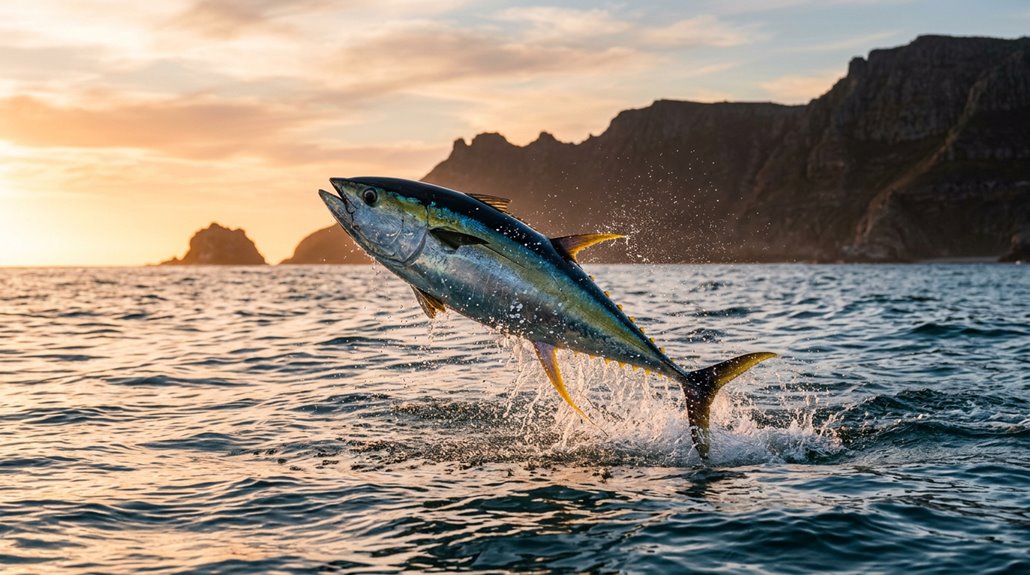
Most anglers chase yellowfin tuna at the wrong time of year — and walk away empty-handed. Off South Africa’s Cape Point, two elite feeding windows exist, roughly March–June and October–December, where fish averaging 40–90+ kg surge within 20–30 nm of shore. Water temperature, birds, and bait all whisper exactly where they’ll be. Miss these signals and you miss everything. Read on to find out precisely when to book your charter and what to look for on the water.
Primary Search Intent and Quick Answer: When to Book Yellowfin Charters in South Africa
Frequently, you should book yellowfin charters well in advance because prime Cape Town trips concentrate into a few high-demand months. You’ll secure better dates for weekend slots and holiday departures, which fill fastest. Book early for offshore readiness, vessel availability, and long runs to 20–30 nm where most yellowfin tuna South Africa are found.
“You should expect 300–1,500 m depth ranges and bearings roughly 200–270° from Cape Point.”
Plan around sea-surface temperatures near 18°C, which often signals productive water. Consider that first-run weather is more settled, easing logistics. Reserve later-season dates if you want larger average fish (40–60 kg). These best fishing seasons South Africa facts help you choose slots with confidence. Charters are fully equipped with premium fishing tackle and crewed by experienced skippers who handle all heavy equipment and technical logistics on board. A typical fishery feature is the strong convergence of currents that creates a nutrient-rich tuna fishery offshore Cape Town, attracting baitfish and larger predators convergence of Atlantic and Indian Oceans.
Season Windows Explained: March–June Run vs October–December Run
When you plan Cape Town tuna trips, understand there are two distinct seasonal pulses that shape timing and expectations. You’ll see an early March–June run and a later October–December run.
Both run 20–30 nautical miles off Cape Point. Both suit offshore tuna charters and complement KZN tuna fishing seasons nationwide. Origin web server lacks a valid SSL certificate. Experienced skippers and premium tackle provision make a significant difference when navigating these offshore zones to locate productive temperature breaks.
March–June run:
- Water ~18°C, tuna 35–50 kg (77–110 lb).
- Trolling locates fish; spread: two surface lures, two sub-surface lures.
- Teasers 50–70 m; drift with pilchards and chum after strikes.
October–December run:
- Larger fish, average 40–60 kg (88–132 lb), many >90 kg.
- Same offshore zone, higher trophy potential.
“You’ll plan by weather, bait, and daily temperature breaks.”
Best Months and Target Fish Sizes: Why May–June and October–November Stand Out
Because Cape Town has two clear tuna pulses each year, you can plan trips around different goals and expect predictable size ranges. May–June offers steady action, with most fish 35–50 kg (77–110 lb). Weather is more settled, and productive grounds lie 10–40 nm offshore. You’ll use tuna chunking techniques and monitor deep sea fishing water temperature for best results.
- May–June: 35–50 kg average, consistent bites, reliable for mixed-ability groups.
- October–November: 40–60 kg average, many over 90 kg, trophy focus.
- Offshore range: typically 10–40 nautical miles, adjust drift and chunking depth.
- Logistics: book guided charters, allow flexible days for weather.
“You’ll find clear trade-offs between consistency and trophy potential.” Just as tuna fishing benefits from professional guided excursions, Kruger National Park tours rely on experienced rangers to tailor drives and maximise wildlife encounters in the South African wilderness. In coastal regions of the Southern Hemisphere, peak tuna abundance often coincides with seasonal oceanographic changes like currents and upwellings, particularly around Central America.
Reading Water, Birds, and Baitfish: Using Temp Charts and Migration Cues to Find Tuna
Reading water, birds, and baitfish together gives you the clearest image of where yellowfin will bite.
Reading water, birds and baitfish together reveals the best places to find yellowfin.
You begin with temperature charts, seeking offshore water near 18°C and thermal breaks. Use online charts to find current lines and temperature edges, especially 20–30 nm offshore from Cape Point on a 200–270° course.
Watch bird activity next. Clusters of plunging birds mark bait compressed by current breaks. Birds plus temp edges are stronger cues than birds alone.
Scan for bait schools, pilchards and sardines. Visible bait often means predators below. When tuna hit, crews stop and chum to hold fish in the slick.
Quote: “Combine temp charts, bird work and bait for best results.” This method fits both cedar plug trolling and big game fishing KZN operations. Two seasonal runs produce noticeably different-sized fish and conditions, so plan trips accordingly.
Tactics and Gear for Each Season: Chunking, Trolling Cedar Plugs, Heavy Tackle and Clothing Tips
Pick the right tactic for the season and you’ll increase your hookup rate. Use chunking when fish hold near the boat, chopping pilchards to build a cube trail and drifting a fluorocarbon bait down the slick. Troll cedar plugs at 4–6 knots to locate schools, with surface and plunging lures 20–30 m back and teasers 50–70 m. During summer months you’ll often find yellowfin feeding in warmer currents and around temperature breaks, making them easier to locate with a sounder and satellite sea-surface data migratory species.
Fish 80-lb class tackle for Cape Town yellowfin (20–120 kg), expect 35–60 kg typical runs, some over 90 kg. Dress in layers, windproof outerwear, and strong sun protection for long offshore runs. If you’re combining a yellowfin trip with other pursuits, a dedicated team can manage safari logistics SA services including airport transfers and documentation to keep your broader itinerary running smoothly.
- Chunking: chopped pilchards, cube trail, drift bait.
- Trolling: Rapala X-Rap, Storm, Speed Pro.
- Tackle: 80-lb class, 10–40 nm offshore.
- Clothing: layered, windproof, sun protection.
Work with Indian Ocean fishing charters or South African marine charters for guided success.