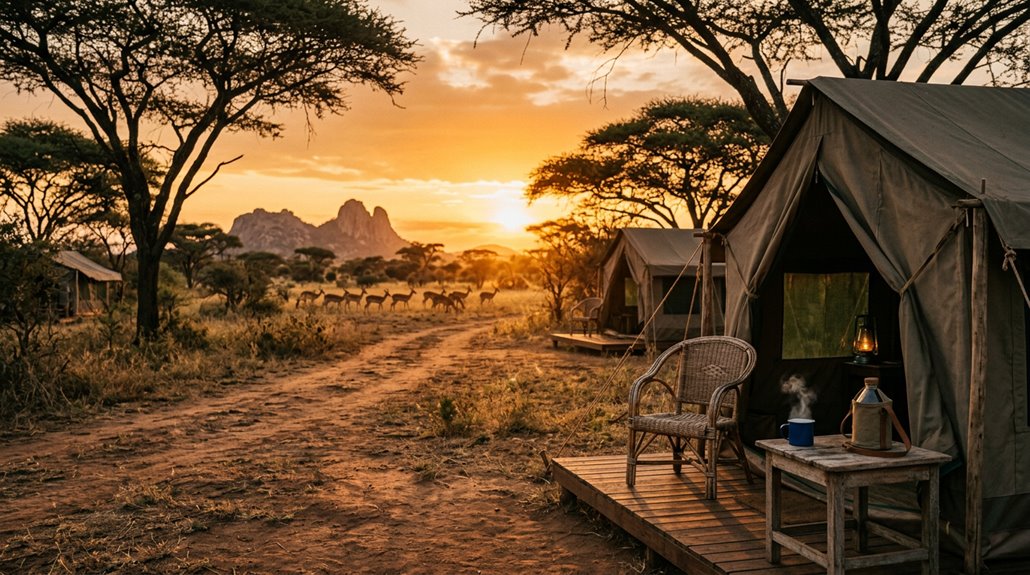
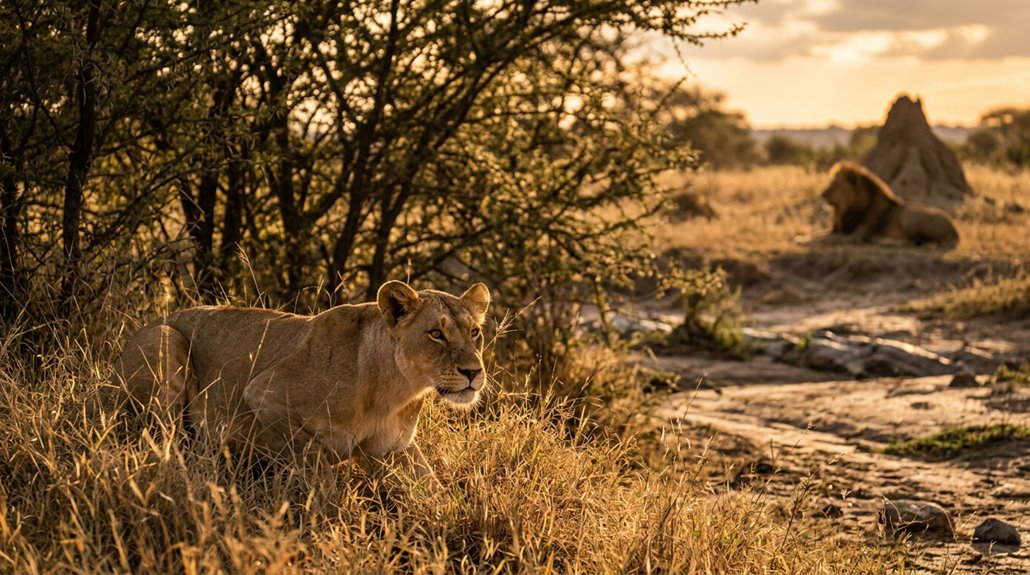
Most visitors spend days in Kruger and never see a lion. Not because the lions aren’t there—but because they’re looking in the wrong places at the wrong times. A handful of specific corridors, roads and waterholes concentrate big cat activity in ways that transform a frustrating game drive into something extraordinary. Rangers know this. Now you can too.
Search Intent & Format: How to Track Lions, Leopards and Cheetahs in Kruger
Start by concentrating your search on the right habitat and time windows. You’ll focus on early morning and late afternoon, the 05:30–09:30 and 16:00–19:30 windows when predators are active. Use slow driving, 15–20 km/h, on dirt roads to read spoor. Tracking big cats in Kruger relies on spoor, dung, and territorial marks.
Start hunts in prime habitats at dawn and dusk, driving slowly to read spoor and track big cats
“Follow fresh paw prints and spoor direction to predict movement.”
- Lions: waterholes and thorn thickets; listen for roars up to 2 km.
- Leopards: trees, rivers, dense bush; prioritise quiet observation.
- Cheetahs: open plains and grass edges; scan sightlines.
Share sightings with guides and drivers. Use loop routes and repeat scans. Professional tracking increases sighting success and yields a great result. Booking private Kruger excursions with experienced rangers who know the terrain significantly improves your chances of locating big cats in their preferred habitats. Lions in Kruger form one of the largest populations in the world relative to park area.
Where to Look: Best Kruger Zones for Lions, Leopards and Cheetahs
You’ll want to focus on three clear zones: central lion country (Olifants–Sabie corridor), riverine leopard pockets (Sabie, Sand, Crocodile systems), and open grassland cheetah zones in central plains.
Each zone offers different visibility and prey patterns; for example, central plains yield over 60% of cheetah sightings while river belts concentrate leopard activity near permanent water. Professional hunters with experience across prime wildlife concessions understand how terrain and water sources consistently dictate where large predators concentrate throughout the day.
Use Skukuza, Lower Sabie, and Satara as base camps to cover these areas efficiently. Southern Kruger is the most accessible region of the park and is ideal for short stays with reliable game viewing, especially for big cats most accessible region.
Central Lion Country
Drive the Skukuza–Satara corridor for the highest odds of lion encounters in central Kruger.
The central grasslands and the Skukuza–Satara corridor concentrate grazers, which increases predator density.
You’ll join private Kruger excursions or South Africa nature trips that focus on lion tracking safari methods.
Guides monitor predator habits in Kruger and water points, noting Leeubron and Satara loops.
Cheetah wildlife tours use open plains for visibility.
Spotting leopards in South Africa is less common here, given their preference for denser cover.
Night options include nocturnal game drives where permitted, improving big cat sightings after dusk.
Drive this route slowly and allow at least five hours to explore key stops like Tshokwane and Satara.
Expert guides craft personalised safari itineraries to ensure your route targets the most active predator zones at the right time of day.
- Feel unity with fellow trackers, shared focus and clear roles.
- Expect systematic scanning, timed stakeouts at water.
- Appreciate measured patience, data-driven route choices.
- Celebrate confirmed sightings, a great result.
Riverine Leopard Pockets
Leopard pockets form where riverine vegetation, large trees, and dry riverbeds intersect, and these spots give you the highest odds of seeing leopards in Kruger. You’ll focus on river corridors like Sabie Sand and Shingwedzi. These areas offer dense cover, shade, and tree forks for daytime rest. You belong to a group that values reliable locations and shared sightings. Once you’ve secured a leopard sighting, a dedicated team can handle your trophy field preparation from the bush through to final delivery.
Key Kruger National Park secrets:
- Skukuza–Lower Sabie corridor, Crocodile Bridge–Lower Sabie, Letaba river road.
- Sabie Sand basin: very high leopard density (one of Africa’s top areas).
- Shingwedzi: strong northern density, higher than south. Punda Maria is productive in winter
Tactics and timing:
- Slow driving, dawn/dusk and night.
- Watch dry riverbeds, tall leadwood, and alarm calls from prey.
Open Grassland Cheetah Zones
Often, central Kruger offers the best chances to find cheetahs because it contains wide open plains and high visibility. You’ll focus on Satara and nearby savanna, plus S28 near Crocodile Bridge and the Mlondozi loop (S29). Visit May to September, the dry season, when visibility improves and sprint hunting fields open. Scan termite mounds, raised heads, and shaded resting spots. You’ll work early mornings and late afternoons, the prime activity windows. There are also excellent lion densities in these open savannahs, making predator encounters common on drives high concentrations of lions.
- Satara and central plains — high cheetah reports, repeat sightings.
- S28 (Crocodile Bridge) — renowned cheetah route, reliable.
- S29 (Mlondozi) and S100 — good secondary options.
- Malelane roads (S25/S114/S118/S119) — seasonal potential.
You’ll feel included, guided, and informed.
What to Watch For: Habitat, Prey Concentrations and Waterholes That Attract Cats
Start by concentrating on habitat and water sources, since big cats follow prey and prey follow water.
You should scout central and south-eastern grasslands for lions, where game density is high and visibility improves detection.
Look to Sabie River corridors, rocky outcrops, and dense riverine forest for leopards.
Seek open plains and clearings for cheetahs, where long sightlines aid pursuit.
“Monitor prey concentrations near Satara, Lower Sabie, and central Kruger; these zones report higher herbivore density.”
Bulleted data:
- Park area: 2,000,000+ hectares.
- Prime corridor: Crocodile Bridge–Lower Sabie–Skukuza–Satara.
- Waterhole role: congregation points in dry periods, ambush routes for predators.
Hunters travelling with firearms to the region should arrange South Africa hunting permits well in advance to ensure a smooth arrival and compliance with local regulations.
You’ll be delighted with sightings when combining habitat, prey maps, and water-source monitoring.
Signs and Sounds: Territorial Markings, Spoor, and Prey Alarm Calls to Follow
You’ve been watching habitat, prey and water sources; now look for the signs and sounds that confirm a cat is using that area. Scan scent posts: urine sprays, faeces, and gland rubs on trees, termite mounds, and road junctions. Note fresh tracks within 24–48 hours, size and claw marks. Listen for alarm snorts and barks from impala, vervet monkeys, and baboons. Combine cues for higher confidence.
- Fresh urine, faeces, or scrape at crossroads — confirms recent territorial use.
- Track size: lion >10 cm pad width, leopard ~8–9 cm, cheetah narrow with claw marks.
- Repeated marking points along patrol routes — predict movement corridors.
- Multiple alarm callers or sudden silence — likely nearby predator.
Timing and Tactics: Early-Morning, Late-Afternoon and Nocturnal Strategies That Work
You’ll get the best start with an early-morning drive, since gates open at sunrise and cooler temperatures raise animal activity, often producing sightings within the first 30–90 minutes.
For nocturnal and slow-drive tactics, use low-speed, quiet scans after dusk and on guided night drives, which increase lion and leopard encounters by concentrating searches on roads and water points.
Combine these windows with winter months (May–September) and central/southern sectors for the highest encounter rates, and you’ll see measurable improvement in sighting success.
Early-Morning Advantage
When you leave camp before sunrise, you exploit the prime wildlife window: the first hour after sunrise consistently produces the highest predator movement in Kruger.
You’ll increase sightings by arriving 15 minutes before gate opening, reaching roads before heat builds, and using Satara or H7 corridors.
Predators move after cooler night conditions, making detection easier.
Use sightings boards and guide input.
You’ll stop at clustered vehicles and listen for alarm calls.
- Arrive 15 minutes early, gain extra road time.
- Target H1‑2, H7, S100 and H6 for lions and leopards.
- Favour riverbanks and trees for leopard sign.
- Use real‑time reports and local guides.
“You’ll find better odds at dawn,” the team reports.
Nocturnal and Slow-Drive Tactics
Night and slow drives often produce the best big-cat encounters in Kruger, so plan to use them alongside dawn and dusk efforts. You’ll join guided night drives that leave at 19:30 or 20:00, lasting about two hours. Evening drives start before dusk and last around three hours. Guides use open vehicles and powerful spotlights. Stay still, avoid sudden movement, and follow the guide’s instructions. Binoculars and low-light camera settings help.
| Time window | Species active | Practical tip |
|---|---|---|
| Evening | Leopards, caracal, hyena | Start before dusk, use spotlight |
| Night | Lions, hyena | 19:30–20:00 start, 2-hour drive |
| Pre-dawn | Wild dog, leopard, serval | Check water holes, low-light settings |
“You’ll be delighted with sightings when the team executes tactics precisely.”
Guides, Roads and Routes: Which Roads, Loops and Ranger Techniques Improve Sightings
Start your day on known corridors and you’ll increase your chances of seeing big cats. Use H1-2/H1-3 between Skukuza and Satara for lions, and the Satara grasslands for concentrated herds. Drive H7 from Orpen to Satara early, and check the S100 towards Gudzani Dam.
For leopards, follow H4-1 along the Sabie River, S1 (Ingwe Donga), S46, S93 and S50 near Kanniedood Dam. For cheetah, patrol H1-1 around Pretoriuskop, the first kilometres of H7, and the H4-2 plus S130 Gomondwane Loop.
- Dawn and dusk drives, main tactic.
- Night drives, permitted where legal.
- Slow driving, under 20 km/h near bush.
- Ranger radio sharing, real-time sightings.
“Guides manage timing, permits, and safety.”