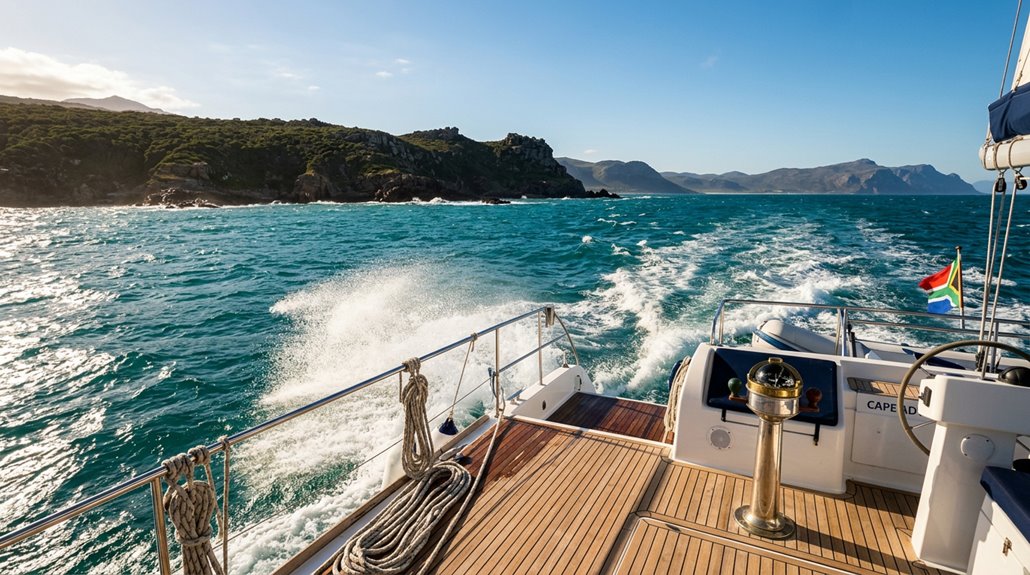
Most people booking a South African marine charter get it wrong before they even leave the dock. Choosing the wrong charter type, an uncertified skipper, or the wrong departure hub can turn an ocean adventure into a costly, even dangerous, mistake. Whether you’re eyeing Cape Town’s dramatic Western Cape coastline or Durban’s rich Indian Ocean fishing grounds, the decisions you make in the planning phase determine everything. This guide breaks down exactly what you need to know before booking.
How to Pick the Right Charter Type and Departure Hub
When choosing a charter, match the vessel to your mission and schedule. You’ll use charter type selection to decide between voyage, time, bareboat, or a captained listing. Voyage charters suit single trips, owner retains operations. Time charters rent by period, you gain scheduling influence. Bareboat gives full control, you take crew and risks.
Pick a departure hub selection that fits your route. Cape Town serves Western Cape itineraries. Durban suits Indian Ocean and fishing. Knysna fits Garden Route lagoon cruises. Johannesburg isn’t a departure hub.
Check passenger capacity early; some listings cap at 12. Budget bareboat averages US$3,521.70 in listings. Book early, availability can be limited. Many travellers use platforms like Getmyboat to browse listings and contact captains directly for bookings and support support@getmyboat.com.
KwaZulu Natal offshore fishing charters target powerful pelagic species like Marlin and yellowfin Tuna in some of the most productive deep-sea waters along the South African coastline.
Choose a Reputable Skipper and Verify Safety Credentials
Selecting the right skipper starts with verified credentials and clear operating limits. You should ask for the skipper’s SAMSA certification and confirm the certificate class. Category C commonly permits operation up to 15 nautical miles from a safe haven. Request proof of issuance and expiry, and verify it matches the vessel and route.
“Confirm medical and fitness records are current,” you should demand. A valid doctor’s certificate and eyesight test are standard for Category C applications. Ask for first aid, fire fighting, and radio operator training certificates. For commercial charters, verify life-raft and two-day fire fighting endorsements.
Check insurance and written operating limits. This step supports offshore boat safety and guarantees compliance before you book. A Certificate of Competence is often required by insurers and finance houses, so always confirm the skipper holds a valid Certificate of Competence. Experienced charter operators also manage every aspect of safari logistics SA to ensure a fully organised and stress-free experience from arrival onwards.
Match Boat Size, Capacity, and Onboard Amenities to Your Trip
You should match boat size, passenger capacity, and onboard amenities directly to your trip goals and guest needs. Pick small boats for tight groups; many South African fishing charters list capacity of 4 guests for efficient day trips. Choose larger vessels for extended cruising, more comfort, and increased range.
Check capacity limits as hard constraints. Overloading reduces deck working space for rods, bait, ice, and catch handling. For deep-sea trips, prefer open deck layouts for casting and landing fish. For family cruises, seek mixed layouts with seating and cabin space.
KZN deep sea charters often include fishing equipment, bait, lures, and ice. Confirm catch and release fishing practices and onboard storage. Some operators also offer custom adventure packages that combine deep-sea fishing with wildlife safaris for a more complete South African experience. “Match vessel function to mission” is a sound planning rule. An excellent option to consider is Overdraft Charters, which is rated highly by customers.
Trip Length, Pricing, and Catch Policies (Keeps vs. Catch-and-Release)
Plan trip length around goals and budget, and match pricing to the vessel class and distance.
Choose half-day fishing trips (about 5 hours) for tighter schedules and lower cost, or 8-hour full-day trips for deeper-water access.
Expect Durban examples at R5,000 for 5 hours and R7,000–R8,500 for 8 hours.
Yacht day rates commonly range ZAR 10,000–20,000 (5–8 hours), mid-range ZAR 20,000–50,000.
“Pricing drivers: duration, vessel class, distance, package contents, and capacity.”
“Sample contents: bait, tackle, equipment, ice, lures, basic deep-sea charter amenities.”
Catch policy varies by operator and region.
Operators follow species limits, seasonal closures, and conservation rules.
Confirm keep-versus-release terms before booking, for legal compliance and a great result.
Once your catch is confirmed, professional trophy field preparation ensures every skin and set of horns is maintained at the highest quality from the first moment in the field.
Local charter contact details and on-the-day logistics can affect final costs and services offered; check for local availability.